Horsepower and Its Impact on Dump Truck Acceleration
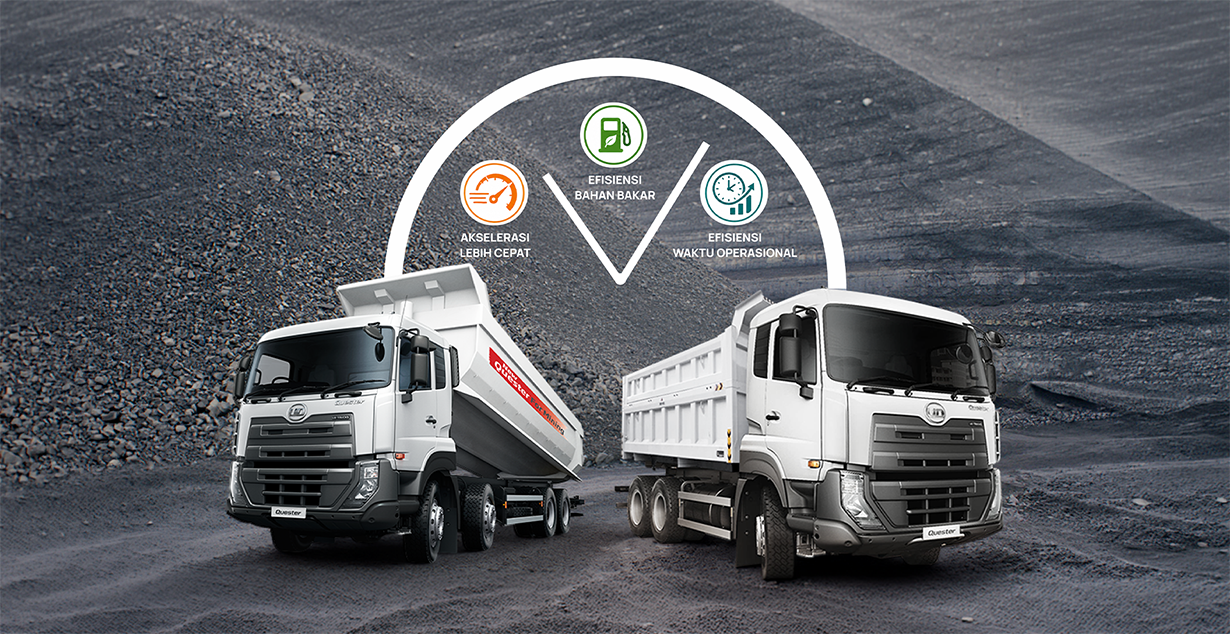 In haulage, mining, and large-scale construction industries, a dump truck plays a critical role as the backbone of material transportation. These heavy-duty vehicles are designed to carry high-volume loads, such as overburden, coal, aggregates, and soil, under demanding, repetitive work cycles..
Behind that operational strength lies one essential metric: horsepower (HP). Engine performance, especially HP, directly influences how quickly a dump truck accelerates, how stable it remains under full load, and how efficiently it completes each hauling cycle.
This article explains:
● What horsepower means in the context of dump trucks
● The difference between HP and torque
● How HP affects acceleration and productivity
● A reference to two heavy-duty models from UD Trucks
What Is Horsepower (HP) and Why Does It Matter?
Horsepower (HP) is a unit of measurement used to quantify engine power output. In dump trucks, HP indicates the total power the engine can generate to move the vehicle and its payload.
Higher HP generally means the engine can sustain higher performance, especially under heavy loads or during extended duty cycles.
1. The Origin and Measurement of Horsepower
The term horsepower, as cited from britannica.com, was first introduced by the Scottish engineer James Watt in the 18th century. He created the term to compare the power output of steam engines with the strength of horses.
In modern engines, HP is calculated using torque and engine speed (RPM):
- Torque
- RPM (revolutions per minute)
Simple formula:
HP = (Torque × RPM) ÷ 5252
This formula shows that horsepower is influenced by both rotational force (torque) and engine speed.
Horsepower vs Torque: A Quick Context for Heavy Vehicles
- Horsepower (HP) → Total engine output power
- Torque → Twisting force that helps move the vehicle from a standstill
Both are essential in heavy-duty dump truck applications.
Horsepower vs Torque: What’s the Real Difference?
Horsepower: Total Power for Sustained Performance
Horsepower plays a major role when:
● Indicating the total power produced by the engine.
● Helping the vehicle maintain a stable speed.
● Affecting travel time efficiency in long-distance operations.
Torque: The Force Behind Initial Movement
Torque plays a major role in:
● Moving the truck from a full stop
● Climbing steep inclines
● Operating in muddy or uneven terrain
Why Both Matter for Dump Trucks
In dump truck operations, the balance between HP and torque determines:
- Acceleration responsiveness
- Climbing capability
- Cycle time efficiency
- Load stability
High horsepower without adequate torque may result in poor low-speed performance, while strong torque without sufficient HP may limit sustained speed.
How Horsepower Impacts Dump Truck Acceleration
1. Smooth Power Delivery Under Heavy Loads
Adequate horsepower ensures stable engine performance when:
● Carrying maximum payload
● Traveling uphill
● Operating in long-duty cycles
2. Fuel Consumption and Operational Efficiency
● Optimal HP helps the engine operate at its most efficient level.
● Too low HP makes the engine work harder.
● An engine forced due to insufficient power tends to consume more fuel.
3. Improved Work Cycle Productivity
In mining and construction, productivity is measured by:
● Travel time
● Loading and unloading duration
● Number of hauling cycles (ritase) per day
Horsepower directly influences how quickly each cycle is completed.
4. Reliability in Challenging Terrain
- On challenging terrain, HP helps maintain engine performance stability.
- HP prevents the engine from losing power when carrying extreme loads.
Case Study: Horsepower in Two UD Trucks Models
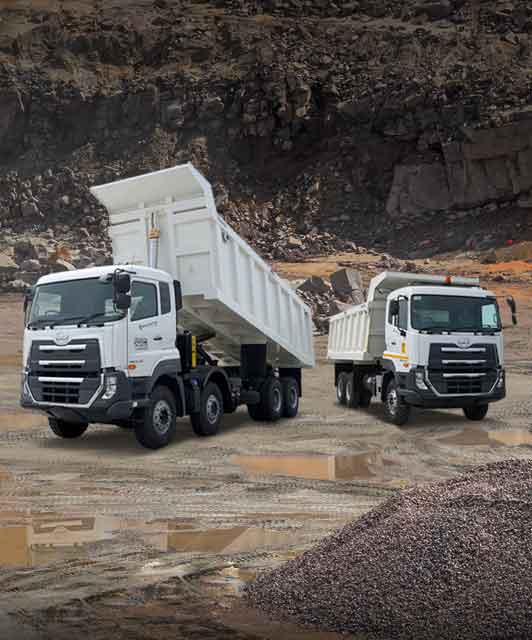
Below is an overview of two heavy-duty dump truck variants from UD Trucks widely used in construction and mining operations.
1. UD Trucks CGE37084R
The CGE37084R variant is engineered for heavy-duty hauling with configurations designed to support:
● High-capacity payloads
● Medium-distance transport
● Construction site operations
Its horsepower output strikes a balance between acceleration and fuel efficiency, making it suitable for projects with high daily cycles.
2. UD Trucks CWE37064R
The CWE37064R variant is built for more demanding applications, including:
● Open-pit mining
● Rugged and steep terrains
With strong engine output and optimized torque characteristics, it maintains reliable acceleration even under maximum payload conditions.
Structured Summary: Horsepower and Its Operational Impact
| Aspect | Horsepower (HP) | Impact on Dump Truck Operations |
| Definition | Total engine power output | Determines overall vehicle performance |
| Acceleration | Helps reach operating speed faster | Reduces travel time |
| Heavy Load Handling | Maintains engine stability under full load | Improves cycle efficiency |
| Fuel Efficiency | Optimal sizing improves fuel economy | Prevents excessive consumption |
| Rough Terrain | Sustains power output under stress | Enhances operational reliability |
Other Factors That Influence Dump Truck Acceleration
Horsepower is critical, but several other elements also play a role:
1. Payload Weight
Heavier loads require more power to accelerate effectively.
2. Transmission & Gear Ratios
Gear ratios determine how efficiently engine power is transferred to the wheels.
3. Tires and Traction
Proper tire grip ensures optimal power delivery to the ground.
4. Driver Performance
Acceleration techniques and throttle control influence fuel efficiency and mechanical longevity.
How to Maximize Dump Truck Acceleration in the Field
To ensure horsepower performs optimally:
1.Perform regular engine maintenance
Routine inspections and tune-ups maintain stable engine output.
2. Select appropriate gears for terrain conditions
Avoid forcing high gears on inclines under heavy loads.
3. Monitor load distribution
Uneven payload distribution can affect traction and acceleration.
4. Use transmission settings optimized for route profiles
Proper configuration enhances both speed and efficiency.
Frequently Asked Questions (FAQ)
1. How does horsepower affect acceleration under full load?
Horsepower determines how well the engine maintains power when carrying the maximum payload. Higher HP supports steadier acceleration, even if not as fast as when empty.
2. Is higher horsepower always better for a dump truck?
Not necessarily. The ideal horsepower depends on project requirements, terrain conditions, and payload capacity. Oversized engines may reduce fuel efficiency if not properly utilized.
3. How is horsepower related to fuel consumption?
An engine with insufficient HP may work harder and consume more fuel. However, excessive HP can also increase fuel use if the output exceeds operational needs.
Horsepower Is More Than a Number
Horsepower is a key indicator of dump truck performance, particularly in terms of acceleration, load stability, and overall productivity. The ideal configuration balances HP, torque, transmission setup, and operational practices to maximize efficiency.
Choosing the right heavy-duty vehicle—such as models from UD Trucks—ensures that engine output aligns with project demands.
Need the Right Dump Truck for Your Project?
Every operation has unique requirements. Consult with experts to determine the optimal horsepower and engine configuration for your workload.
📞 Contact UT Call at 1500 072 (24/7) for product consultation and competitive offers.