3 Types of Road Equipment for Infrastructure Projects
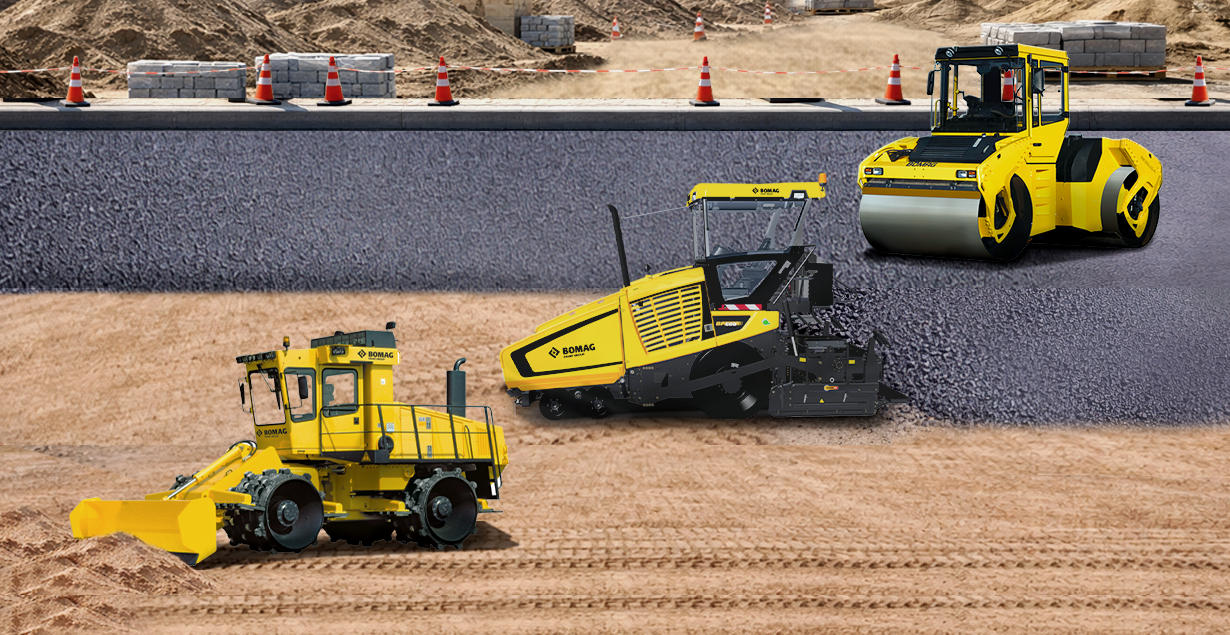 Road construction equipment plays a vital role in modern infrastructure development, ensuring projects are completed according to timeline targets, budgets, and quality standards. Strong and durable roads depend not only on materials but also on the accuracy of selecting and using heavy equipment at every stage of work.
Choosing the right road construction equipment directly impacts:
● Project completion speed
● Stability and durability of road structures
● Operational cost efficiency
● Workplace safety on-site
In general, road construction stages begin with preparation and compaction of the subgrade, followed by aggregate spreading, asphalt paving, and finishing. Each stage requires specialized equipment with different yet integrated functions.
National Project Productivity and the Strategic Importance of Proper Road Construction Equipment
In Indonesia, the acceleration of national road development and strategic infrastructure projects continues to increase the demand for precise, reliable, and appropriately scaled road construction equipment.
Data from the Ministry of Public Works and Housing (PUPR) indicates that road construction and upgrading programs are consistently implemented to strengthen connectivity and reduce national logistics costs.
Meanwhile, the Asian Development Bank emphasizes that sustained infrastructure investment is essential for maintaining economic growth in developing countries, including Indonesia.
From a technical perspective, various pavement engineering studies affirm that the quality of subgrade compaction and asphalt paving significantly influence long-term road durability.
Therefore, the selection of road construction equipment is not merely an operational consideration, but a strategic decision that directly impacts project productivity, structural stability, and the efficient allocation of infrastructure development budgets.
What Exactly Is Road Construction Equipment and Why Is It Important?
Road construction equipment refers to machines or heavy tools specifically designed to support the building, maintenance, and repair of roads. In an infrastructure context, this equipment functions to compact soil, lay asphalt, and ensure road surfaces are even and stable.
The main functions of road construction equipment include:
1. Compaction of subgrade soil and aggregate layers
2. Even distribution of asphalt mixtures
3. Final compaction to enhance structural strength
4. Supporting finishing processes to meet technical specifications
Without the support of appropriate equipment, the risks of soil settlement, premature cracking, or surface waviness will increase.
Get to Know 3 Types of Road Construction Equipment and Their Functions On-Site
Below are three primary types of road construction equipment commonly used in infrastructure projects.
1. Compactor: A Strong Foundation Begins with Optimal Soil Compaction
A compactor, or soil compactor, functions to compact the subgrade and aggregate layers before asphalt paving begins. This stage is crucial because the road structure depends on the strength of the underlying layers.
Main functions of a compactor:
● Compacting the subgrade
● Increasing soil bearing capacity
● Reducing air voids within aggregate layers
Optimal compaction prevents future road surface settlement. Compactors from the BOMAG product line distributed by United Tractors are designed to deliver consistent and stable soil density.
2. Vibro Roller: The Key to a Smooth and Dense Road Surface
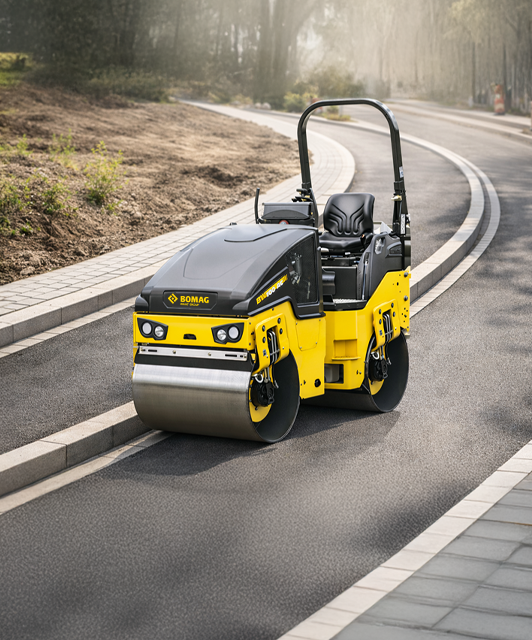
A vibro roller, or tandem vibratory roller, is used during the compaction stage of asphalt layers. This equipment operates with a vibration system to ensure the asphalt mixture is evenly distributed and meets density standards.
Main functions of a vibro roller:
● Compacting asphalt layers
● Producing a smooth road surface
● Enhancing resistance to traffic loads
The compaction process using a vibro roller helps reduce the risk of premature cracking and extends the road’s service life.
3. Asphalt Finisher: Precision in Every Asphalt Layer
An asphalt finisher plays a role in the asphalt laying process before the final compaction stage. This equipment ensures the asphalt mixture is distributed with thickness and width that matches the design.
Main functions of an asphalt finisher:
● Evenly laying asphalt
● Adjusting layer thickness
● Maintaining consistent lane width
Precision at this stage determines the final quality of the road surface. Errors in asphalt laying can cause waves or surface irregularities.
Summary of the 3 Road Construction Equipment Types and Their Roles
To simplify understanding, here is a summary of the functions of the three road construction equipment types:
Equipment Type | Work Stage | Main Function | Impact on Road Structure |
| Compactor | Soil preparation | Soil & aggregate compaction | Strong and stable foundation |
| Asphalt Finisher | Laying | Even asphalt distribution | Thickness aligned with design |
| Vibro Roller | Finishing | Asphalt compaction | Smooth & durable surface |
How Does Road Construction Equipment Support Infrastructure Project Success?
1. Time and Cost Efficiency
Using the right equipment accelerates the construction process and reduces the risk of rework. Precise compaction and laying help prevent material waste.
2. Road Quality and Durability
Roads built with proper procedures and equipment have more stable structures and can withstand vehicle loads over the long term.
3. Workplace Safety On-Site
Modern road construction equipment is equipped with control and safety systems that help operators work more safely and efficiently.
Don’t Choose Incorrectly! Here’s How to Determine the Right Road Construction Equipment
Selecting road construction equipment should consider several important aspects.
1. Road Project Stages
Each stage requires different equipment — compactors for the foundation, asphalt finishers for laying, and vibro rollers for finishing.
2. Terrain Conditions and Work Volume
Large-scale projects require higher equipment capacity compared to small-scale projects or local road repairs.
3. Technical Specifications and Capacity
Consider working width, compaction capacity, and equipment control systems to ensure alignment with project needs.
4. Service Support and Spare Parts
Ensure the equipment is supported by after-sales services and spare parts availability to avoid prolonged downtime.
Why Is United Tractors a Strategic Partner for Road Construction Equipment?
United Tractors is an authorized distributor of various global heavy equipment brands, including the BOMAG product line for road construction. The support provided includes:
● Provision of high-quality road construction equipment units
● Professional after-sales services
● Availability of genuine spare parts
● Technical support and project consultation
With a nationwide service network, United Tractors helps ensure infrastructure projects run smoothly and efficiently.
Still Have Questions About Road Construction Equipment? Here Are the Answers
1. Which equipment is most important in the early stages of road construction?
Compactors are essential in the early stages because they compact the subgrade to ensure structural stability.
2. What is the difference between a compactor and a vibro roller?
Compactors are used for soil and aggregate compactions, while vibro rollers focus on compacting asphalt layers.
3. How do you determine the dump truck capacity for a road project?
Dump truck capacity is determined based on material volume, hauling distance, and the project completion timeline.
Ready to Build Quality Infrastructure with the Right Road Construction Equipment?
Road construction equipment plays an important role in determining the quality, efficiency, and success of infrastructure projects. By understanding the function of each piece of equipment and selecting the appropriate units, companies can ensure strong and long-lasting results.
For consultation on road construction equipment needs, contact UT Call 1500 072 and get the best solutions from the professional team at United Tractors.