What Is a Mining Truck, Types and Roles in Mining?
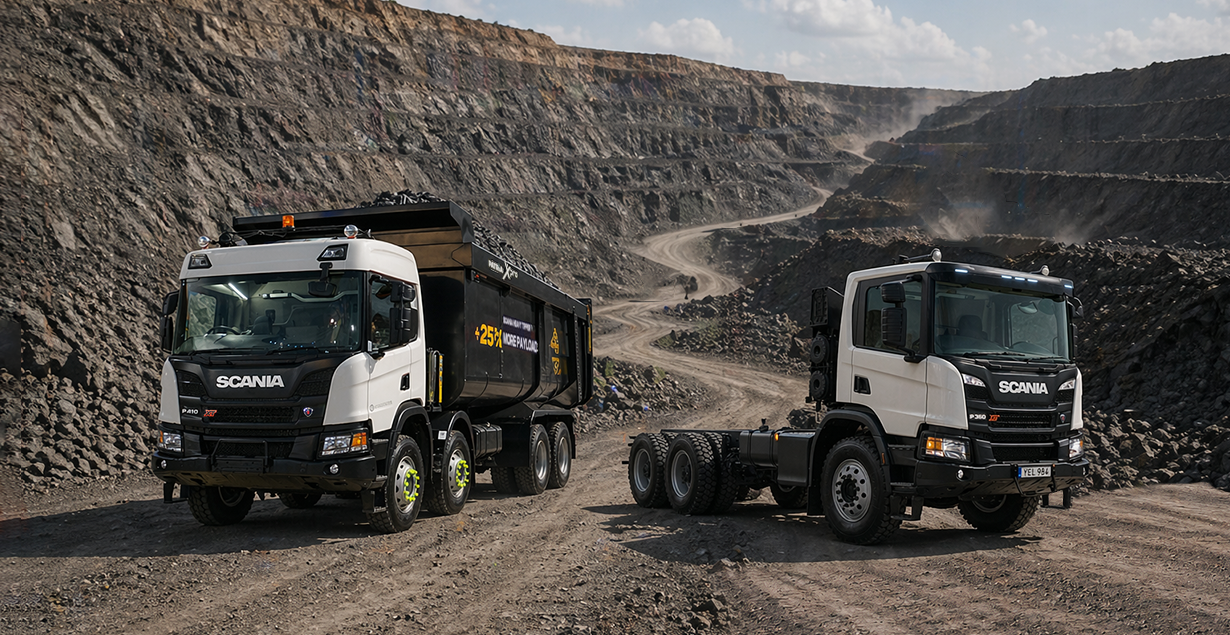 In modern mining operations, heavy logistics form the primary foundation that determines the continuity of production—from extraction to material distribution. Every mining project generates tens to hundreds of thousands of tons of material daily that must be transported efficiently and safely. Mining trucks play a critical role in the haulage cycle—from overburden transport to mineral distribution, making them a strategic component of mining operations that cannot be overlooked.
The efficiency of the right truck fleet directly impacts productivity, operational durability, and overall costs (total cost of ownership). Trucks that do not match capacity requirements or are not engineered for extreme terrain can lead to downtime, higher fuel costs, and increased safety risks. For this reason, global truck manufacturers such as Scania offer a range of mining trucks specifically designed for heavy workloads and extreme environments, featuring powerful engines, robust construction, and reliable performance.
What Is a Mining Truck? Definition and Differences from Conventional Commercial Trucks
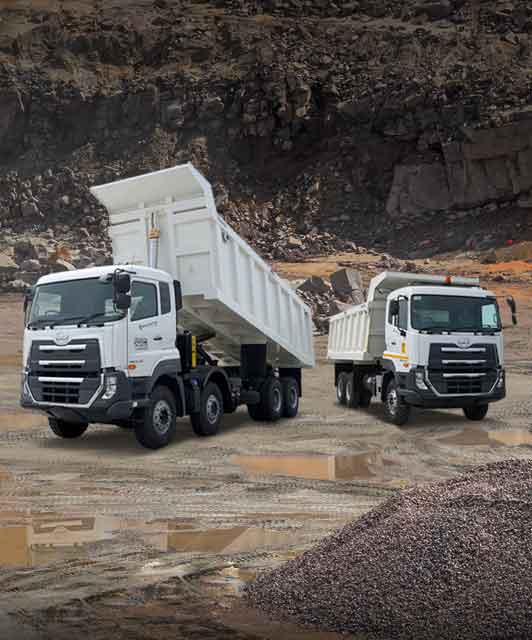
Operationally, a mining truck is a heavy vehicle specifically engineered to transport large volumes of material within mining and large-scale construction environments. Key characteristics of mining trucks include:
● Heavy-duty construction: Built to handle extreme loads and terrain, unlike light commercial trucks designed primarily for on-road distribution.
● High payload capacity: Capable of moving substantial material volumes within each work cycle.
● Robust drivetrain and fuel systems: Engines and transmissions designed to support heavy payloads without compromising durability or fuel consumption.
The primary distinction between mining trucks and conventional commercial trucks lies in their technical specifications and operational environments. Commercial trucks are generally designed for distribution or light construction on paved roads, whereas mining trucks are purpose-built for pit areas, gravel roads, and other demanding terrains with higher loads and more intensive work cycles.
The significance of mining trucks in operational productivity is substantial, as these units serve as the backbone of raw material and overburden transportation. Without a resilient truck fleet, mining projects may experience bottlenecks in the load–haul–dump cycle, directly affecting production targets and profitability.
Types of Mining Trucks from Scania
Scania products distributed by United Tractors fall into two primary categories for mining applications:
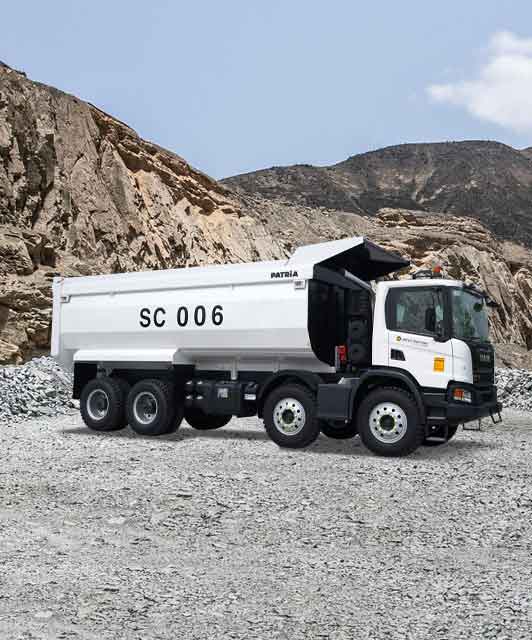
1. Mining Tipper / Heavy Hauler Trucks — Primary Hauling Vehicles
This category includes high-capacity trucks engineered to transport heavy materials across extreme terrain. Several models commonly deployed in mining operations include:
| Model | Engine Power | Wheel Configuration | Gross Capacity | Primary Role |
| Scania Super G500-A6X4 | 500 HP | 6×4 | GCW ~120 tons | Transport coal and heavy mining materials |
| Scania Super P420-B6X4-2 | 420 HP | 6×4 | 41 tons GVW | Tipper truck for overburden and ore |
| Scania Super R620-A6X4 | 620 HP | 6×4 | GCW ~270 tons | Heavy haulage for demanding loads and longer distances |
Source: United Tractors product pages
● Scania G500-A6X4: This model is a high-powered heavy hauler equipped with a 500 HP engine, engineered to handle challenging terrain and extremely large loads in mining projects, including coal transportation of up to approximately 120 tons per cycle.
● Scania P420-B6X4-2: A 420 HP engine combined with a 6×4-wheel configuration provides strong stability in rugged terrain while supporting payloads of up to 41 tons GVW. This unit is suitable for hauling mining materials such as overburden, ore, or coal.
● Scania R620-A6X4: This variant features the highest engine output within Scania’s heavy hauler lineup. Powered by a 620 HP V8 engine with substantial gross combination capacity, the truck is designed to meet the demands of long-distance hauling and extreme payload requirements.
2. Mining Supporting Trucks — Operational Support Vehicles
Supporting trucks are essential for various critical tasks within mining areas, including pit reconditioning, fuel supply, water distribution, and field service operations. Scania products in this category are typically engineered with flexible attachment configurations and high engine capacity while maintaining operational efficiency.
Examples of Scania mining supporting trucks include:
| Model | Engine Power | Wheel Configuration | Load Capacity (GVW) | Primary Role |
| Scania Super P410 B6x4-2 | 410 HP | 6×4 | ~25–35 tons | Multifunction support truck for operations such as service trucks or fuel trucks |
| Scania Super P410 B8x4-2 | 410 HP | 8×4 | ~30–40 tons | Provides extra stability, suitable for heavy loads in confined mining areas |
| Scania P420 B6x6 | 420 HP | 6×6 | ~30–40 tons | Delivers maximum traction while supporting various mining operational tasks |
Source: United Tractors product pages
● Scania P410 B6x4-2: A multifunctional truck suitable for support roles such as service trucks or fuel trucks.
● Scania P410 B8x4-2: Provides additional stability through its 8×4 configuration, making it suitable for heavy loads in restricted work areas.
● Scania P420 B6x6: The 6×6 configuration delivers maximum traction in extreme terrain while supporting a wide range of mining support tasks.
These trucks are not only used as auxiliary transport vehicles but also form part of a broader mining logistics ecosystem that includes water trucks, fuel trucks, and service vehicles equipped with specialized compartments when required.
The Role of Mining Trucks in Operational Mining Activities
Selecting the right mining truck helps organizations achieve the following:
1. Supporting Production Flow
Trucks operate within the load–haul–dump cycle alongside loaders or excavators, transporting material from the pit to processing facilities or stockpiles quickly and consistently.
2. Accelerating Material Mobility
With large payload capacities, trucks reduce the number of hauling cycles required, enabling production targets to be achieved faster without increasing the number of operating units.
3. Reducing Downtime and Improving Utilization
Industrial-grade trucks such as those from Scania are engineered with durable components, safety features, and consistent performance to ensure operations continue with minimal disruption.
Strong truck support not only enhances productivity but also helps lower long-term operational costs (TCO).
Key Factors in Choosing a Mining Truck
When selecting the appropriate mining truck, several critical factors must be considered:
1. Payload Capacity vs. Haul Distance
The longer the hauling route, the more important it becomes to select a truck with strong engine performance and stability at medium speeds.
2. Terrain Type and Operational Conditions
Muddy surfaces, rocky terrain, and steep inclines require the right wheel configuration and drivetrain system to ensure optimal traction.
3. Fuel Efficiency and Operating Costs
Efficient engines help reduce daily operational expenses.
4. Service Support and Spare Parts Availability
The presence of an after-sales network, such as United Tractors, supports operational continuity through service availability, spare parts supply, and UT Call assistance.
Mining Truck Solutions by United Tractors
As the official distributor of Scania in Indonesia, United Tractors provides comprehensive mining truck solutions to support large-scale projects, ranging from heavy haulers to supporting trucks. Key advantages include:
● Products equipped with high engine power and configurations engineered for mining terrain.
● Strong after-sales service networks and availability of genuine spare parts.
● A focus on efficient total cost of ownership supported by comprehensive services.
The collaboration between Scania’s truck quality and United Tractors’ service network delivers significant added value for mining companies seeking to maintain productivity and operational efficiency.
Still Have Questions About Mining Trucks?
1. What is the difference between a heavy hauler and a supporting truck?
A heavy hauler is the primary truck used to haul and transport heavy materials, while a supporting truck performs auxiliary functions such as water supply, field service, and refueling.
2. How do you choose a mining truck based on haul distance?
Select trucks with high engine output and stable wheel configurations for longer routes, while also considering fuel efficiency and axle configuration.
3. What is the ideal mining truck capacity for open-pit mining?
Ideal capacity depends heavily on production targets and haul distance. Scania heavy hauler models typically offer large GVW ratings reaching tens of tons and can be paired with high-capacity trailers for demanding hauling operations.
The Right Mining Truck Solution for Your Operations
Scania mining trucks—both Mining Tipper / Heavy Hauler Trucks and Mining Supporting Trucks—deliver an optimal combination of engine performance, payload capacity, and operational capability in extreme terrain. These attributes are essential for supporting mining productivity.
To receive product consultation or recommendations tailored to your project requirements, contact UT Call at 1500 072 and speak directly with United Tractors’ expert team.