What Is a Crane, and How Does It Work? An Overview
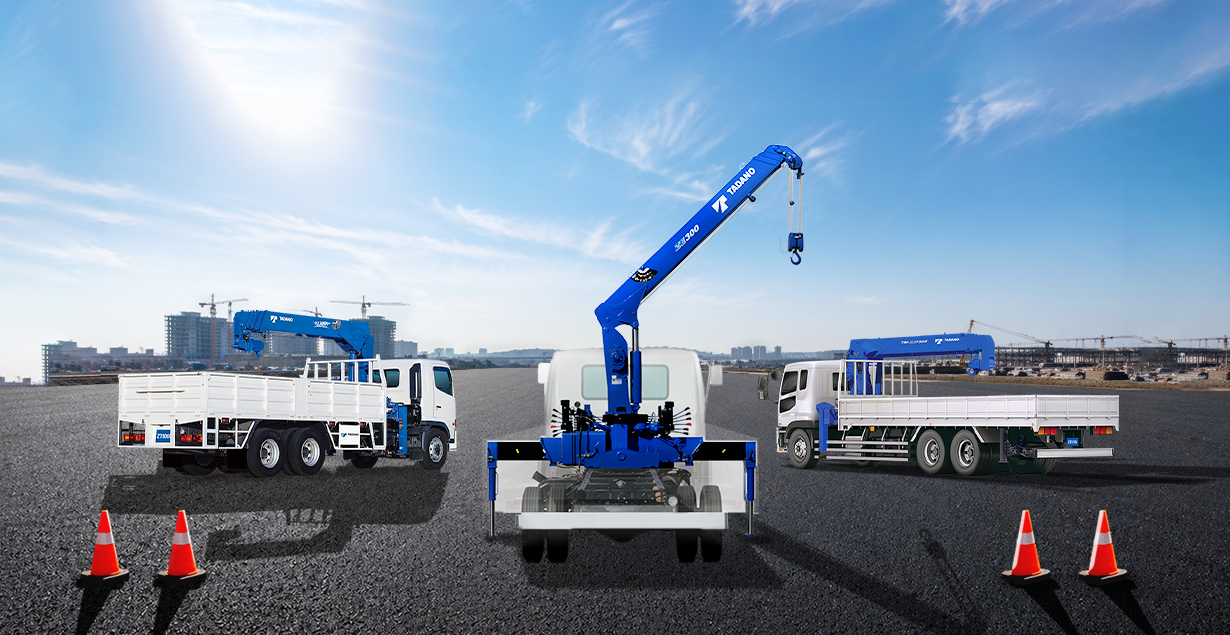 Amid Indonesia’s rapid infrastructure growth and industrial expansion, project success is increasingly determined by how efficiently companies manage the movement of heavy materials. One piece of equipment that plays a vital role in maintaining operational flow is the crane.
More than just a lifting device, cranes function as productivity drivers on job sites. Their ability to move large loads with precision helps accelerate project timelines, reduce reliance on manual labor, and minimize workplace risk.
Today, companies evaluate cranes beyond lifting capacity alone. Stability, operational flexibility, ease of installation, and after-sales support have become strategic considerations to ensure long-term cost efficiency.
Understanding what a crane is, how it works, and which type best fits your operational needs is essential before making a heavy equipment investment.
Statistics on Crane Equipment Distribution and Demand
Recent industry reports highlight steady expansion in the global crane sector over the past few years. Insights from International Cranes and Specialized Transport indicate that the Asia-Pacific region accounts for the largest share of demand growth, driven by accelerated infrastructure and industrial development.
Meanwhile, market research data published by Statista estimates the global crane market at tens of billions of US dollars, with continued growth projected as construction, energy, and manufacturing projects increasingly require efficient, high-safety heavy-lifting solutions.
What Is a Crane? Understanding Its Role in Modern Projects
In general, a crane is a heavy-duty machine designed to lift, lower, and move heavy loads using an integrated system of mechanical structures and hydraulic power. It enables lifting operations to be performed faster, more safely, and with greater control than conventional methods.
Primary Functions of a Crane
In field operations, cranes are commonly used to:
● Lift construction materials such as steel structures and precast concrete
● Support loading and unloading of oversized cargo
● Relocate heavy machinery and industrial equipment
● Assist installation work at elevated heights
● Improve overall project efficiency
Crane vs. Other Lifting Equipment
Equipment | Typical Lifting Capacity | Reach | Mobility | Primary Use |
| Crane | Up to >10 tons | Vertical & horizontal | High | Heavy-duty lifting |
| Forklift | Typically <5 tons | Limited | Very mobile | Pallet handling |
| Hoist | ~0.5–3 tons | Vertical only | Fixed | Factory/warehouse lifting |
| Winch | Varies | Horizontal | Semi-fixed | Pulling loads |
This comparison highlights why cranes are considered essential assets—they combine strength, reach, and operational flexibility in a single solution.
How Does a Crane Work? Understanding the Technology Behind It
At its core, crane operation relies on load balance and force distribution. Modern engineering, however, has significantly enhanced lifting precision and safety.
Basic Lifting Principles
● Boom acts as the primary arm that extends toward the work area
● Wire rope and hook secure and support the load
● Hydraulic system generates the power required for smooth movement
● Counterbalance helps maintain the crane’s center of gravity
Stability and Safety Factors
To reduce the risk of tipping during heavy lifts, cranes incorporate several critical components:
● Outriggers to widen the support base
● Reinforced chassis for optimal load distribution
● Load indicators to monitor lifting limits
● Overload protection systems to prevent unsafe operations
Operators control these mechanisms via ergonomic panels designed for precise maneuvering—even in confined job sites.
The integration of these technologies allows cranes to deliver consistent performance in demanding environments.
Key Crane Components: The Foundation of Heavy-Duty Lifting Performance
For cranes to perform reliably under intense working cycles, several core components must function seamlessly:
● Boom → Determines lifting reach and operational flexibility
● Hook & wire rope → Secure loads with high structural strength
● Hydraulic system → Provides powerful, controlled lifting force
● Outriggers → Maintain stability during operations
● Control system & operator cabin → Enable accurate and safe handling
Together, these components ensure cranes maintain both performance and safety standards across industrial applications.
A Widely Used Type: Telescopic Boom Cargo Crane
One of the most commonly deployed crane types in modern projects is the telescopic boom cargo crane. Its extendable boom design allows it to adapt quickly to varying lifting requirements without demanding large installation space.
Key Characteristics
- Extendable and retractable boom
- Truck-mountable for higher mobility
- Fast setup time
- Strong lifting capability
- Suitable for multiple industries
These advantages make telescopic cranes particularly valuable for operations requiring both strength and flexibility.
Recommended Tadano Crane Series from United Tractors
United Tractors offers a range of Tadano cranes engineered to meet diverse operational demands—from urban projects to heavy industrial environments.
Crane Series Specifications Overview
Series | Max Lifting Capacity | Max Boom Length | Working Radius | Key Strength | Ideal Application |
| TM-ZE300 Series | ~3.03 tons | ~9.9–10.1 m | ~8.7 m | Compact, lightweight, easy operation | Urban projects & material distribution |
| TM-ZT1000 Series | ~4.0 tons | ~11.5 m | ~10 m | Higher power with stable performance | Mid-scale construction |
| TM-ZX1500 Series | Up to ~15-ton class | >20 m | Wide | Heavy-duty performance | Large-scale and industrial projects |
This specification table enables decision-makers to quickly compare capabilities and align crane selection with project requirements.
Product Reference: Choose the Model According to Your Project Needs
Each project has different lifting capacity and working radius requirements. To simplify the evaluation process, below is a list of Tadano crane models available through United Tractors.
1. TM-ZE300 Series
Light to medium-duty telescopic boom crane, ideal for material distribution and urban projects.
Available models:
● TM-ZE303MH
The most compact configuration in this series. TM-ZE303MH is suitable for light material transportation, utility installation, and urban projects that require high mobility and easy maneuverability in confined areas.
● TM-ZE304MH
Has a longer boom reach compared to ZE303MH, making TM-ZE304MH more flexible for work with farther lifting points. Ideal for contractors who need a balance between unit size and working radius.
● TM-ZE305MH
The variant with the longest boom in the ZE300 series. TM-ZE305MH provides maximum flexibility in the 3-ton class, suitable for utility projects, panel installation, and distribution work requiring higher vertical reach.
2. TM-ZT1000 Series
Designed for construction and industrial operational needs with a larger lifting capacity and optimal stability.
Available models:
● TM-ZT1004H
TM-ZT1004H is a ±10-ton class crane with stable performance for medium-scale construction, steel structure lifting, and heavy equipment loading. Delivers strong lifting power while maintaining operational efficiency.
● TM-ZT820H Series
The TM-ZT820H Series offers a balanced capacity configuration between power and flexibility. Suitable for construction and industrial projects that require high precision and a wider working radius compared to the light-duty class.
3. TM-ZX1500 Series
Heavy-duty crane for large-scale projects and heavy industries with high lifting capacity requirements.
Available models:
● TM-ZX1500 Series
Designed for up to ±15-ton class, this series supports heavy industrial, mining, and large construction projects. The TM-ZX1500 Series has a long boom and an optimal stabilization system. This unit is suitable for complex lifting that requires high lifting power and a wide working radius.
Strategic Functions of Cranes Across Industries
Construction
● Lift steel frameworks and precast panels
● Accelerate building erection processes
● Reduce high-risk manual handling
Logistics
● Support heavy cargo loading and unloading
● Improve vehicle turnaround time
● Increase warehouse efficiency
Mining
● Lift heavy equipment components
● Assist maintenance operations
● Move supporting materials across sites
Manufacturing
● Install production machinery
● Relocate heavy equipment
● Support facility expansion
Given their broad application, cranes should be viewed not merely as tools—but as strategic assets that sustain operational continuity.
Tips for Choosing the Right Crane for Your Project
Selecting the right crane requires a structured evaluation beyond technical specifications alone.
1. Define lifting capacity
Ensure the crane can safely handle peak load requirements without approaching its operational limit.
2. Evaluate boom reach
Longer reach provides greater operational flexibility, especially in complex layouts.
3. Assess job site conditions
Ground stability and workspace constraints directly impact crane performance.
4. Prioritize safety standards
Choose equipment that complies with recognized certifications and regulations.
5. Work with an authorized distributor
Reliable after-sales support and the availability of spare parts are critical to minimizing downtime.
The Advantages of Tadano Cranes from United Tractors
As a trusted heavy equipment distributor in Indonesia, United Tractors supplies Tadano cranes, known globally for their engineering quality and safety standards.
Key advantages include:
● International safety and quality benchmarks
● Stable performance in demanding work cycles
● Professional technical support
● Genuine spare parts availability
● Extensive nationwide service network
This level of reliability helps companies protect productivity while maximizing equipment lifespan.
Frequently Asked Questions About Cranes
1. What is the difference between telescopic and conventional cranes?
Telescopic cranes feature extendable booms, offering greater adaptability across various lifting scenarios.
2. How do you determine a safe lifting capacity?
Always refer to the manufacturer’s load chart and operate below the maximum threshold to maintain a safety margin.
3. Do crane operators require certification?
Yes. Certified operators possess the technical knowledge and safety awareness necessary for proper crane operation.
A Strategic Investment for Long-Term Productivity
Cranes have become integral to modern industrial operations. With high lifting capacity, strong stability, and operational flexibility, they enable companies to complete projects faster without compromising safety.
Choosing the right crane is more than a purchasing decision—it is a strategic move to safeguard operational efficiency, control long-term costs, and support sustainable project execution.
For more information on selecting the right Tadano crane for your operational needs, contact UT Call at 1500 072 or visit the official United Tractors website to receive professional guidance from experienced specialists.